
What Can You Eat After Wisdom Teeth Removal? Food Choices and Questions
Publisher: Benefits of Keeping Wisdom Teeth. General educational information; this article has not been reviewed by a licensed dental professional.
Choose food using the instructions given for your own procedure. A universal list cannot account for every extraction, health condition, dietary restriction or stage of recovery. This page does not claim that a particular food speeds socket healing or prevents infection.
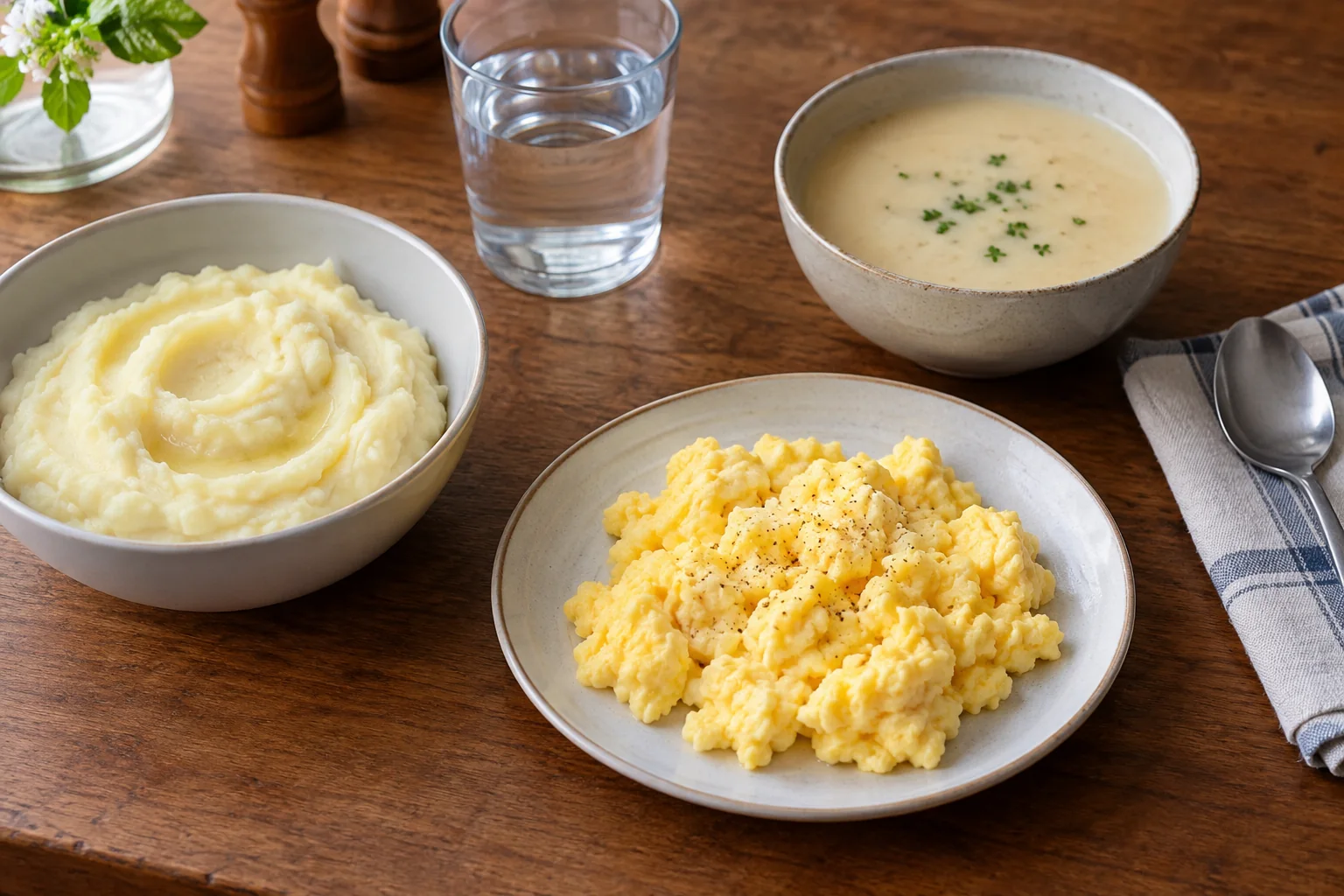
Start with texture and temperature
UCLH’s general extraction instructions recommend soft foods for the first few days and warn about hot food or drinks while the mouth is numb. Examples include mashed potato, scrambled egg, soft pasta or soup. Adapt choices to your own dietary requirements and instructions.
Soft food and meal ideas to discuss with your treating team
If your postoperative instructions allow soft foods, use the examples below as preparation ideas. Check the texture and ingredients rather than assuming a food is suitable because it appears on a list. Adapt choices for allergies, dietary restrictions and the instructions for your procedure.
| Meal idea | Preparation check | What to clarify |
|---|---|---|
| Soft scrambled egg | Keep the texture soft; leave out crunchy toast or crisp toppings. | Does this fit your diet and the texture your clinician advised? |
| Smooth mashed potato | Mash until the texture is consistent; avoid crispy additions. | What temperature and portion are comfortable under your instructions? |
| Smooth soup | Check for firm pieces, seeds or crunchy garnishes. | Is this appropriate at your stage of recovery, and when may you drink after anaesthesia? |
| Very soft pasta | Check that the cooked texture matches your instructions; do not rely on the package description. | Are you ready for food requiring more chewing? |
A shopping list built around your own instructions
- Pick a few suitable options you already like rather than buying a large fixed “recovery diet.”
- Check ingredients against allergies and any prescribed diet.
- Plan the preparation and storage so that someone can help if needed.
- Ask the clinic about food and drink instructions before the procedure, including any fasting instructions.
- Keep the clinic’s contact details with the discharge sheet.
What about takeout or fast food?
Check the actual dish and preparation. A restaurant name is not a guarantee of suitable texture, temperature or ingredients. Ask whether a dish can be supplied without crisp toppings or firm pieces. If you are unsure whether you can move on from your advised foods, ask the treating team rather than choosing by a recovery-day number.
These ideas do not promise faster healing, prevent infection, or replace your postoperative plan. Our flexible recovery checklist helps organize questions about returning to usual eating.
Questions before leaving the clinic
- When may I start eating and drinking after my anaesthesia or sedation?
- What textures should I use initially?
- Which foods or drinks should I avoid, and for how long in my case?
- When can I return to my usual diet?
- What should I do if pain prevents adequate eating or drinking?
When advice seems inconsistent
A general website and a procedure-specific discharge sheet can differ. Contact the treating team for clarification rather than combining them into your own protocol. If you do not have the written instructions, request a copy.
Correction to earlier food claims
Food texture examples do not establish that a particular meal will accelerate healing or prevent infection. Follow the treating clinician’s instructions and use these examples to prepare questions about returning to eating.
See our return-to-eating checklist for organizing follow-up questions.